


EVELIXIA Vehicle-to-Grid Research Presented at UPEC 2026
Aggiornamento: 2 ore fa
From electric mobility to grid flexibility, Vehicle-to-Grid (V2G) integration is opening new possibilities for electric vehicles to play an active role in the energy system. But making this possible requires not only technological solutions, but also the right regulatory framework.
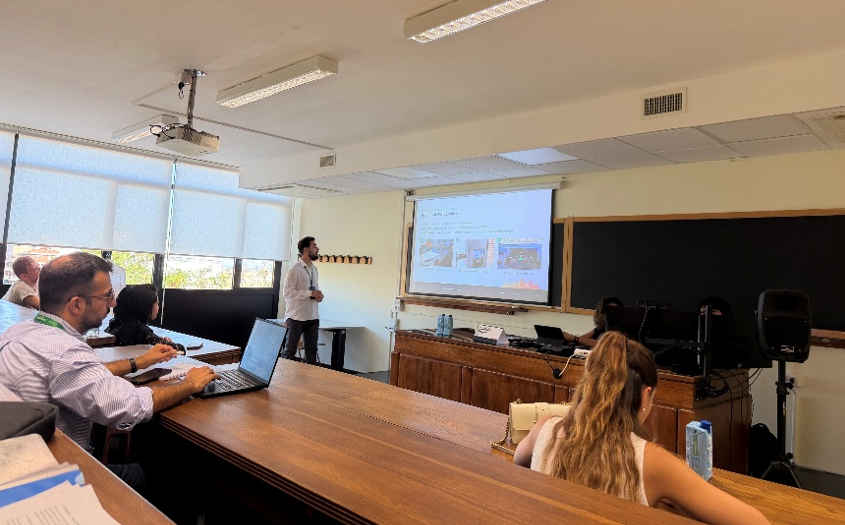
This was the focus of the EVELIXIA contribution to the 61st Universities Power Engineering Conference (UPEC), held at the University of Cagliari, Italy, from 30 August to 2 September 2026, gathering more than 150 participants.

The Energy Transition Research Center (EnTReC) team from the Technical University of Cluj-Napoca (TUCN) presented the paper “Regulatory Readiness of Vehicle-to-Grid Integration in Romania: Comparative EU Analysis,” now published in IEEE Xplore.
Drawing on the EVELIXIA Cluj-Napoca pilot, the research assesses Romania’s readiness for V2G against the wider EU framework and practices in France, Germany, Spain and Italy, also using the UK Project Sciurus trial as a benchmark.
The study shows that V2G deployment goes beyond hardware and technical readiness. Legal definitions, grid connection rules, market access, metering and export tariffs all play an important role in enabling its effective implementation.
The analysis indicates that Romania is technically ready for V2G integration, while its regulatory framework remains incomplete. To address this gap, the authors propose a staged implementation roadmap to support the progressive deployment of V2G solutions.
By bringing these findings to UPEC 2026, the TUCN team contributed to the discussion on the conditions needed to enable electric vehicles to become active participants in more flexible and responsive energy systems.


